Planting a fresh lawn is an investment of time, money, and patience. Whether you have overseeded an existing patch or laid down fresh seed on bare soil, one of the most critical factors in determining the long-term health of your turf is knowing exactly when to cut new grass.
Mow too early, and the delicate root systems will be ripped from the soil. Mow too late, and the overarching blades will block essential sunlight from reaching younger seedlings below. This guide covers the exact metrics, tests, and preparations required for your lawn's crucial first cut.
1. The 4-Inch Height Rule
The most reliable indicator of when to cut new grass is its physical height. You must wait until the majority of the new grass blades reach between 3.5 and 4 inches (8 to 10 centimeters) tall. At this height, the grass has developed enough leaf surface area to photosynthesize effectively, which in turn fuels the development of a robust sub-soil root system.

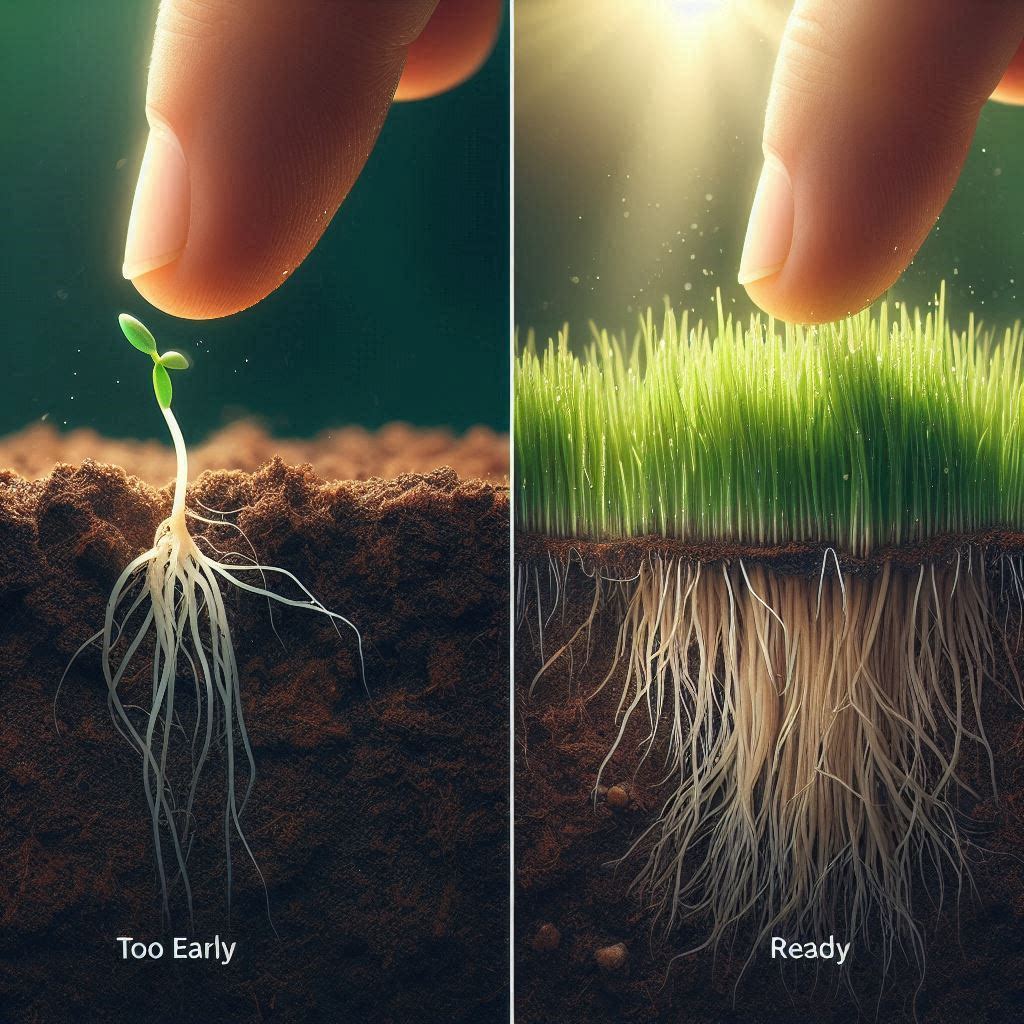
2. The Root Maturity "Tug Test"
Height alone isn't enough. Because new grass is incredibly fragile, you need to ensure the roots are anchored deeply enough to withstand the suction and pulling force of a rotary lawnmower blade. Before bringing out the heavy machinery, perform the manual tug test.
Select a small clump of the new grass and give it a gentle but firm upward pull. If you feel the soil yielding and the white roots begin to lift, the grass is not ready. If the blades resist the pull and remain firmly anchored in the turf, it is safe to proceed.
3. Stick Strictly to the One-Third Rule
When the time comes to execute the first cut, you must adhere to the golden rule of turf management: never remove more than one-third of the grass blade's total length in a single mow.
If your new grass has reached 4 inches, you should only be trimming off the top 1 to 1.5 inches. Scalping the lawn removes the energy-producing portion of the plant, sending the grass into shock and drastically stunting its growth cycle.
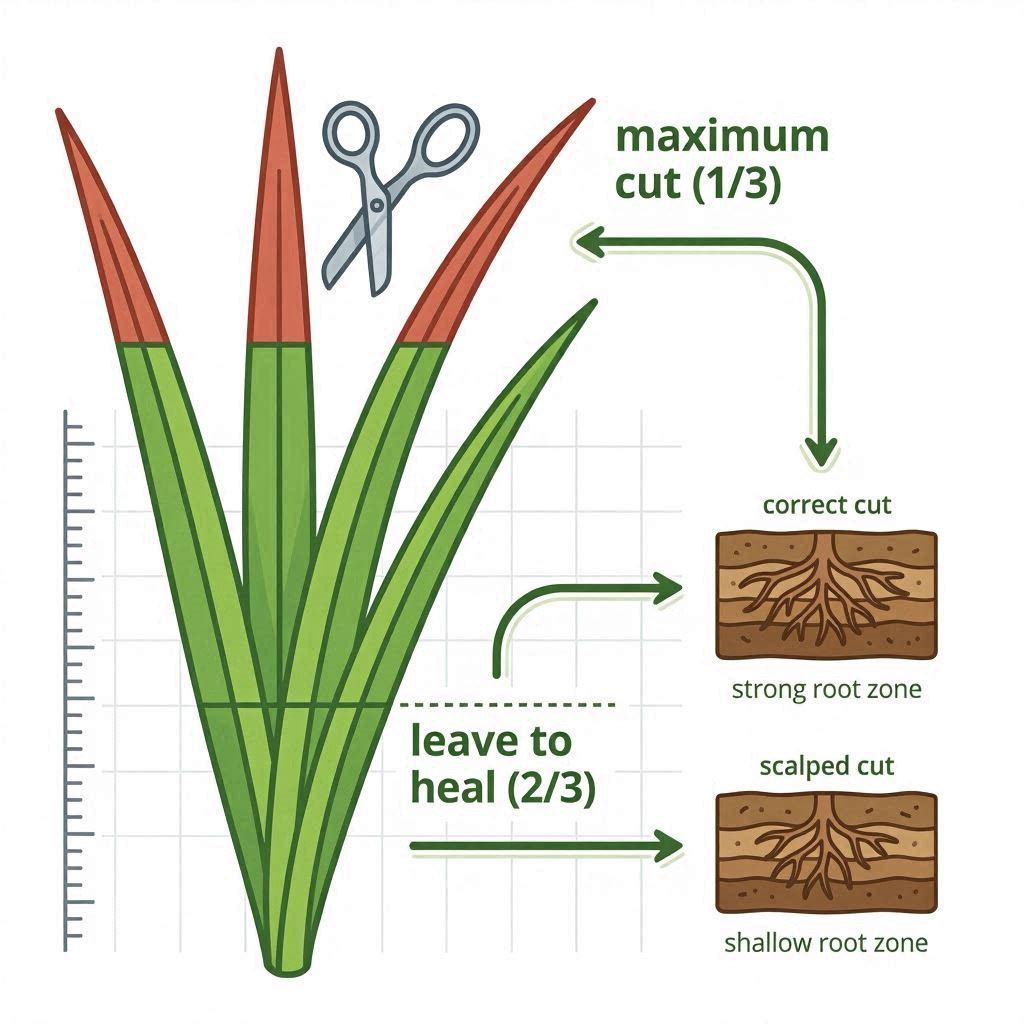
Pro Tip: If your grass has overgrown the 4-inch mark due to heavy rain, do not attempt to cut it all down at once. Take off one-third, wait three to four days for the grass to recover, and then cut it again to reach your desired height.
4. Wait for Ideal Environmental Conditions
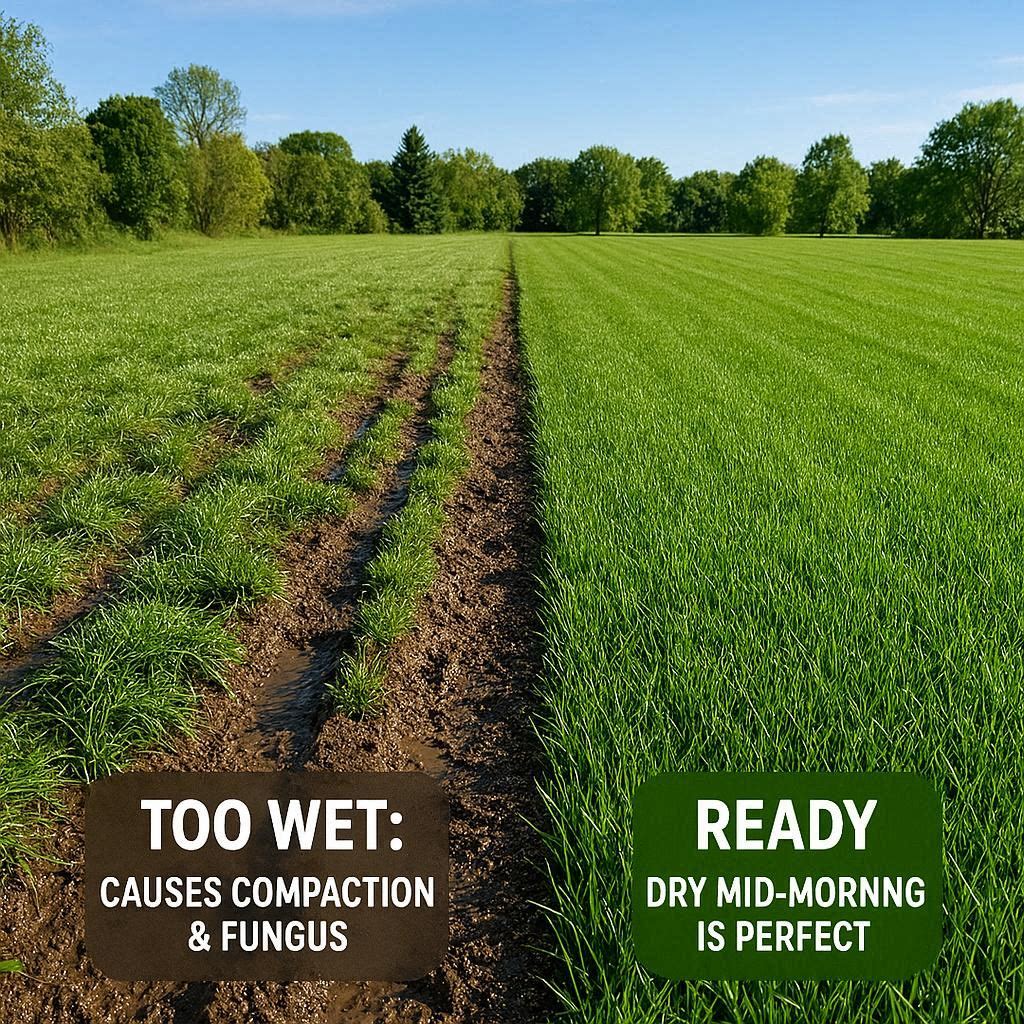
The condition of your environment is just as important as the condition of the grass. You should only mow new grass when both the blades and the underlying soil are completely dry. Cutting wet grass causes the mower blades to tear the grass rather than slicing it cleanly, leaving jagged edges that are highly susceptible to fungal diseases.
Furthermore, rolling a heavy lawnmower over saturated ground compresses the air pockets out of the topsoil, suffocating the young, developing root systems.
5. The Ultimate Pre-Mow Equipment Check
New grass requires a delicate touch. Before you start the engine, verify that your lawnmower is set to its absolute highest deck setting. This ensures you don't accidentally scalp uneven patches of soil.
Additionally, ensure your mower blade is freshly sharpened. A dull blade will bludgeon the young seedlings, whereas a sharp blade provides a surgical cut that heals quickly.

Frequently Asked Questions
How long does it take for new grass to be ready to cut?
Typically, it takes between 4 to 8 weeks from the day of germination for new grass to reach the optimal height of 3.5 to 4 inches, depending on the seed type, weather conditions, and watering schedule.
Should I bag or mulch the clippings on the first mow?
For the first few mows, it is highly recommended to bag your clippings. While mulching is excellent for mature lawns, leaving thick clumps of wet clippings on delicate new seedlings can block sunlight and promote disease.